
By Isabella Rodriguez
Billings continues to evolve as its housing market shifts in response to demand, affordability pressures, and active development plans. Whether you’re buying, renting, or following the newest construction, here’s a closer look at what’s shaping homes and neighborhoods in our city.
Home Prices & Inventory
The median sale price of a home in Billings hovers around $390,000, up slightly from last year—about a 0.5% increase—while median listing prices have reached approximately $460,000, reflecting ongoing pricing strength across many neighborhoods. Homes typically spend 40–60 days on the market, though this varies widely by area. In many parts of town, buyers can expect to pay close to list price.
Neighborhoods to Watch
In areas like West Shiloh and Billings Heights, asking prices per square foot are among the highest. Those looking in East Central or Central Terry Park may find comparably modest prices.
Rental Market Developments
The average rent across different housing types in Billings is now around $1,470 per month. That includes properties from studios to larger family homes. Many renters are facing slightly higher costs than last year, though some of those increases have begun to level off.
Vacancy rates remain relatively low, particularly for units affordable to households earning moderate incomes. This continues to put pressure on renters and has reignited discussions about long waiting lists for affordable housing.
Major Projects & Local Development
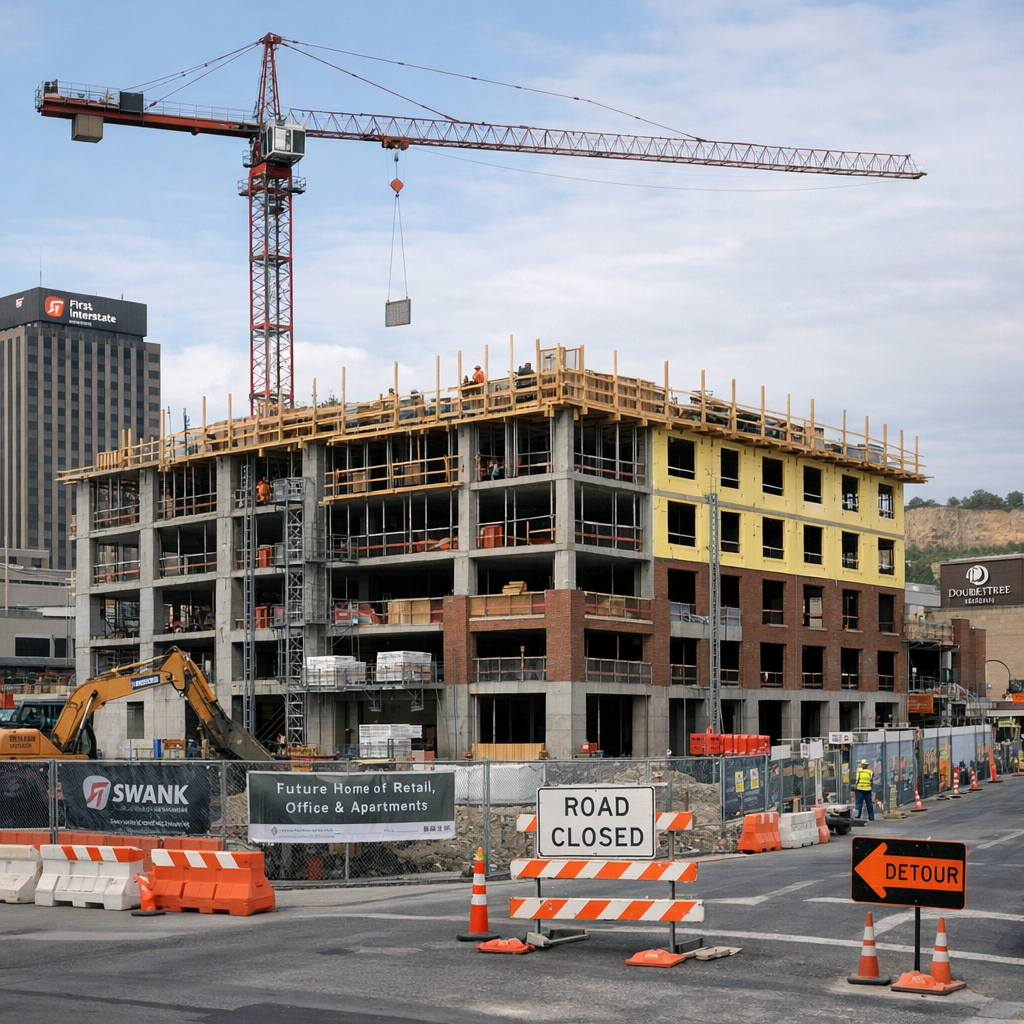
Development is underway downtown and in growth zones across Billings. Key projects include:
- AC Hotel (Marriott): A seven-story property with about 140 rooms and a rooftop bar, taking over the site of the old Rockman Building. Scheduled for completion in mid-2027.
- Futurity Tower: A proposed 12-story, 140-foot mass timber building combining housing and retail, planned for First Avenue North and N. 29th Street. Targets LEED Platinum.
- LB Lofts: A 102-unit affordable housing development on Sioux Lane in Billings Heights. Full funding has been secured; construction expected to begin soon pending approvals.
- Billings Bypass Project: A multi-segment roadway designed to connect Lockwood to Billings Heights across the river. Several segments are complete; construction on the Johnson Lane interchange and related overpasses is expected to ramp up through 2026–2028.
Policy & Planning Signals
City planning efforts like the Billings 2045 Land Use Plan and updates to the Growth Policy underscore the city’s focus on guiding development while aiming to ease land-use constraints. At the same time, affordable housing efforts—projects leveraging tax credits, grants, and public funding—suggest a growing recognition of housing gaps, especially for working households.
What This Means for Buyers and Renters
If you’re planning to buy, be ready to move quickly in desirable neighborhoods, especially if your budget reaches upper-mid price tiers. Given near-list offers and competition for well-maintained homes, good inspections and clear timelines will help.
If renting, costs are rising but not explosively so. Still, options for affordable units are limited. Those eligible for subsidized or tax-credit housing may want to keep tabs on project announcements and apply early.
Takeaways
• Billings’ home values have climbed modestly; inventory remains tight though balanced in some neighborhoods.
• Rents are creeping up, but major jumps seem constrained by vacancy and affordability pressures.
• New development, especially downtown, aims to add diverse housing stock and mix uses—hotel, residential, retail.
• Affordable housing projects are gaining momentum but won’t immediately meet demand; policy and planning will play a big role.