
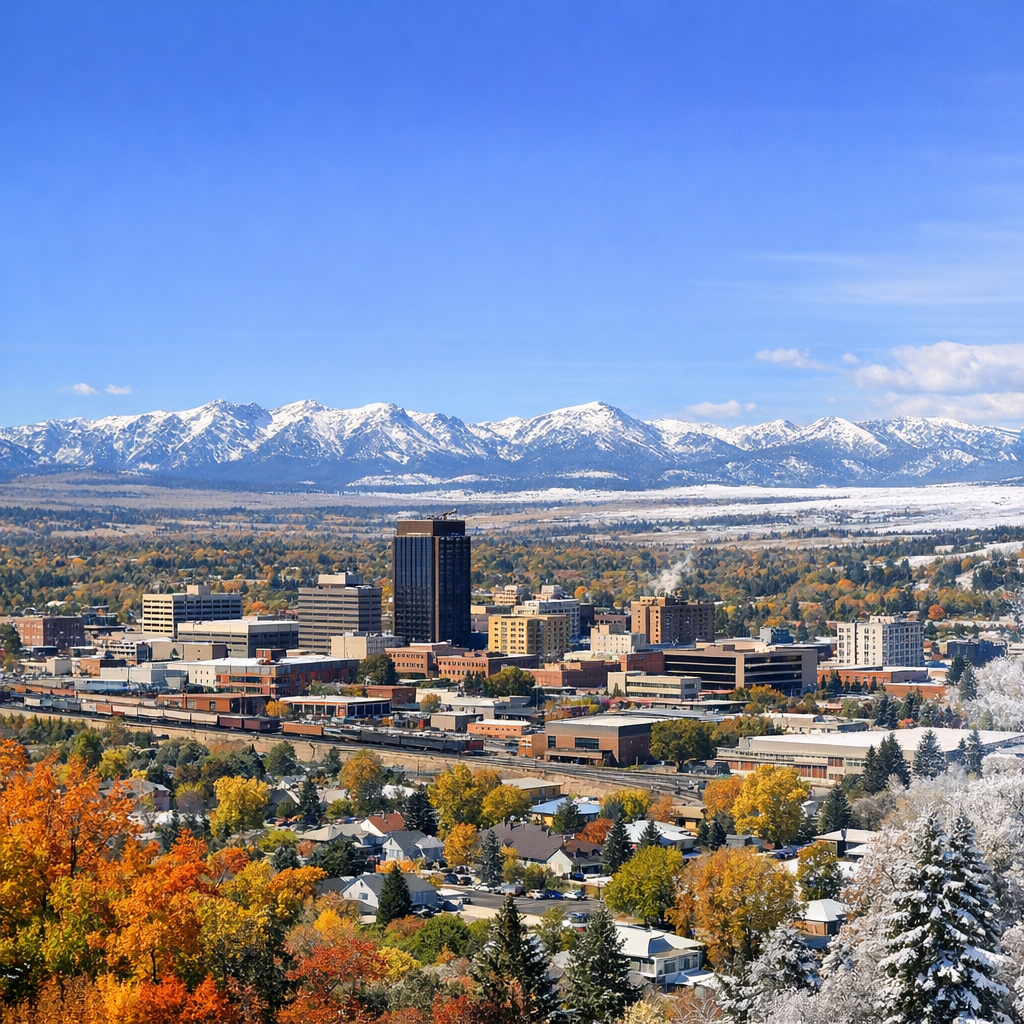
Billings, Montana, offers a distinctive climate characterized by its semi-arid conditions, featuring hot summers and cold winters. Understanding these patterns is essential for residents and visitors alike.
Winter: Cold and Snowy
Winters in Billings are marked by cold temperatures and snowfall. Average lows in January hover around 17.9°F, with highs reaching approximately 36.0°F. Snowfall is common, averaging about 10.6 inches in January. However, the city experiences frequent thawing periods due to Chinook winds, leading to rapid temperature increases and snowmelt.
Spring: Variable and Refreshing
Spring brings a mix of weather conditions. March sees average highs of 49.0°F and lows of 26.9°F, with precipitation averaging 0.9 inches. As the season progresses, temperatures rise, and the landscape begins to green, offering a refreshing change from winter’s chill.
Summer: Warm and Dry
Summers are typically warm and dry. July, the hottest month, boasts average highs of 87.3°F and lows of 59.3°F. Rainfall during this period is minimal, averaging 1.2 inches in July, contributing to the semi-arid climate.
Fall: Mild and Pleasant
Fall offers mild temperatures and a gradual transition to cooler weather. September averages highs of 74.3°F and lows of 48.6°F, with precipitation around 1.4 inches. The season is marked by crisp air and vibrant foliage, making it a favorite for many.
Understanding these seasonal patterns helps in planning activities and preparing for the diverse weather conditions that Billings experiences throughout the year.